“It is often in the darkest skies that we see the brightest stars.”
― Richard Evans
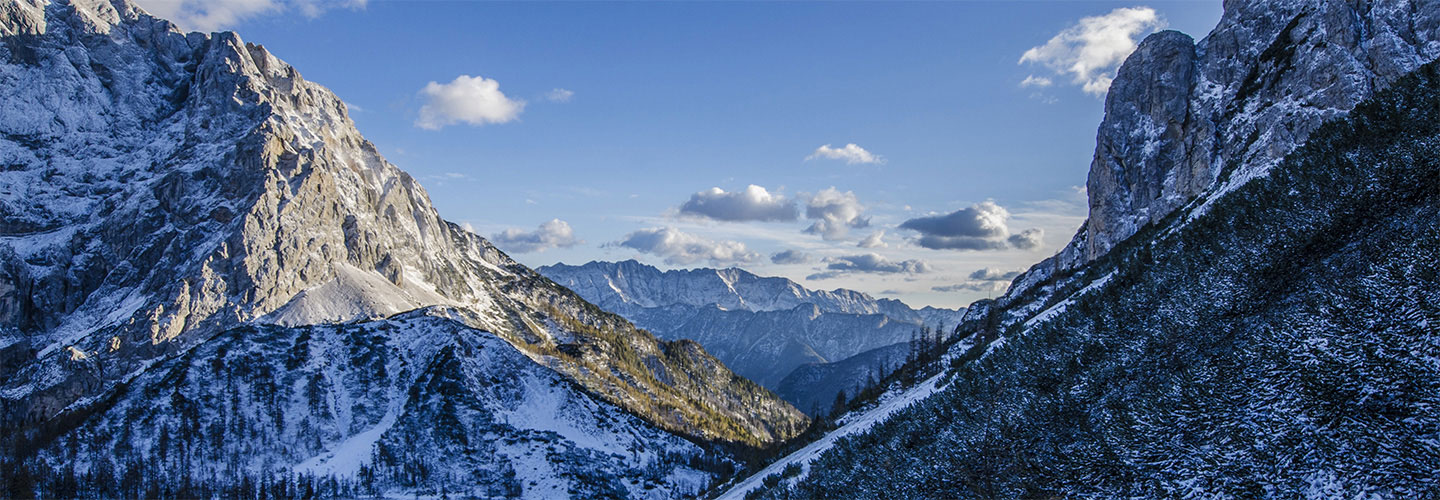
“It is often in the darkest skies that we see the brightest stars.”
― Richard Evans
I grew up a few miles from Lake Harriet in Minneapolis, and had many good times there.
I heard Carrie on Public Radio perform this song, and thought I’d share. Mom and I laughed. The only thing I ever “held” was a leash, a fishing pole, or handlebars — did a lot of biking there.
– –
“When the sun goes down on Minneapolis, I see the master plan.”
– Carrie Rodriguez
* * *
[youtube=http://www.youtube.com/watch?v=dXqQPz4d9T8]Carrie Rodriguez – Lake Harriet
[youtube=http://www.youtube.com/watch?v=-b-VQI5smMI]Cute Animal Friends: Lion and Dog Kiss
[youtube=http://www.youtube.com/watch?v=nomNZYuoPXQ]Dog’s Best Friend a Lion
Dolly Moz | Published on Jul 17, 2013
In nature, Bonedigger, lion, consider Milo, the dachshund, lunch. But in the GW Zoo, Bonedigger and Milo are best friends – Milo even Bonedigger teeth clean. Dana Hertneky KWTV reports.
Related:
Video: Otters Holding Hands – Sweet, Sweet, Sweet!!!
Cute – Otters Holding Hands II!
Christian the Lion—How Our Heart Should Be
Good news!
– –
From: USGS
Mapping the Final Frontier
USGS releases more than 400 updated US Topo maps of Alaska
Released: 9/3/2013 2:30:00 PM
More than 400 new topographic maps are now available for the state of Alaska. The new maps are part of the U.S. Geological Survey Alaska Mapping Initiative, to update foundational data for the state and to replace the existing maps that are about 50 years old.
“These new digital maps of Alaska are elevating our visual record of the surface of the state to 21st century levels,” said Anne Castle, Assistant Secretary of the Interior for Water and Science. “The associatedadvances in human safety, navigation, and natural resource management cannot be overestimated. The productive partnership between the State government and the USGS is facilitating acquisition of the necessary data to complete digital mapping of Alaska, which is a critical chapter in the history of our geographical knowledge of the North American continent.”
The first 400-plus new US Topo maps for Alaska are now accessible and are the beginning of a multi-year project, ultimately leading to more than 11,000 new maps for the entire state. The goal of the AMI is the production of a complete series of digital topographical maps at a scale of 1:25,000 to replace the 1:63,360-scale maps produced about 50 years ago. The maps will be published in digital PDF format (GeoPDF©) and are available for free download and manipulation on a computer.
These new maps include several layers, with an option for the user to turn them on or off. Major updated features include:
To ensure that the maps meet current accuracy specifications and standards, the maps will be made using newly acquired elevation and imagery data from multiple state, federal and commercial sources. The map-making process will be largely automated using software specially adapted by the USGS to create approximately 11,275 digital map quadrangles, covering the entire area of the state.
Mapping in Alaska did not keep pace with records for the rest of the nation as a result of difficult terrain, remote locations, and vast distances. Modern mapping information does not exist over the majority of land in the state. Prior to this effort, topographical maps for much of Alaska were about 50 years out of date and not produced to current standards, which rely largely on high resolution digital imagery and elevation data. As a consequence, essential public services have suffered, among them transportation planning and safety, urban and regional planning, economic development, natural resource management, conservation and scientific research.
This new generation of digital topographic maps will continue the rich and valuable USGS cartographic history, and serve the Nation by providing reliable scientific information to describe and understand the Earth; minimize loss of life and property from natural disasters; manage water, biological, energy, and mineral resources; and enhance and protect quality of life.
For more information and download, go to: http://nationalmap.gov/alaska/
Beautiful person whom I’ve had the pleasure to meet: Anchorage, Alaska people photographer!
– –
Good tips on shooting video with a still camera:
The Alaska State Fair

8/30/13

8/30/13
Plunging toward Earth on the Ejection Seat
Alaska State Fair
I also have some really nice sharp shots too (shoes are here) — thrilled faces from freaking hearts — but it’s probably best not to post them.
– –

8/30/13
I took this shot just as the module ejected,
and the bungees slammed these boys with 4 G’s —
compressing their faces!

8/30/13
Pigglets

8/30/13

8/30/13
Alaska State Fair
– –

8/30/13
Mom Gets a Reuben
Yummy!!!

8/30/13

8/30/13

8/30/13

8/24/13
National Geographic photographer, Sam Abell
at the Anchorage Museum, ASONP

Sam making a point

His eyes…

Suzy, Mom and me
8/28/13
Transcribed by Jeff Fenske
– –
“You’re going to come across a bunch of hurdles,
and those hurdles predominantly should be there
to keep people who don’t want it as much as you do out.”
– Chase Jarvis, photographer
Chase Jarvis: Ep. 106: reDefine: Adorama Photography TV
This is super cool!!!
God’s creation reveals His detailed, diverse and masterful handiwork even after “the fall of man” goofed things up.
Still photos with video:
This bothers me, and seems to be unethical and deceptive business practice to me, unless the photographer is fully up front, telling every potential customer that he put sugar in the flowers, and that the beautiful floral background is a large print he hung on a tripod behind the flower, that replaced the feeder, which he placed there first so the hummingbirds would be accustomed to landing in this artificially created spot.
Replacing the feeder with a flower, and constantly spiking it with sugar:
Once the birds are acclimated to the position of my feeders and the surrounding flashes, I search for local flowers.
I remove the feeder and mount the flower in its place. The birds are primed to return to this location (they have very good spatial memory) for food. Some of them will leave when they don’t see the familiar feeder. But some will try the flower. To satisfy them further, I spike the flower with sugar water from a syringe.
Creating a fake floral background:
One consequence of setting all the flashes to be brighter than the ambient light is that a distant background will be black, as if it were night. That’s because the light from the flashes falls off very quickly at greater distances. (As described by the Inverse Square Law. … To solve this problem, you can put an artificial background behind the hummingbird, close enough to the flashes that it will be properly exposed (but far enough back to avoid shadows). In this case, I’d prepared several backgrounds at home that were natural looking blurs of plants and flowers similar to what we’d find in Ecuador. I often shoot out-of-focus pictures of flowers and vegetation for this purpose, and further blur them in Photoshop. Use your creativity and artistry.
Entire Article is Here:
Update 1/14:
I’ve changed my mind, and have adopted the unsalted variety, discovering they rock with even more fresh taste. Many are luscious white, inside. Awesome!
– –
For a few years, I’ve been getting Hoody’s Toasted In-Shell Peanuts at Costco: a really good deal, currently priced at 5 pounds for $6.55!
I get the salted variety, because salt not only seasons, but also helps preserve the peanuts. Big Pharma has many afraid of eating salt, but it’s in the Bible as a seasoning, and is very healthy. It seems that it becomes unhealthy when foods are made with a lot of corn syrup or sugar, which they then balance with salt — like some Americanized Mexican food, for example.
I always get a package that is still obviously tightly vacuum packed. The bag should fit like a glove. Healthy fats go bad fast — rancid — especially at room temperature. And most of the bags seem to lose their vacuumed seal.
I used to vacuum pack them in jars, and store them in the fridge, but they still wouldn’t stay totally fresh very long.
One day, I saw my chiropractor at Costco, who told me that he freezes them, and even at 0° they don’t turn solid. This is a great tip, as long as we tightly seal the bag; otherwise, the flavors will flavor the freezer and not remain in the peanuts.
Really good source of calcium, protein and healthy oils. Put them into the freezer as soon as you get home.
jeff
Costco on Dimond in Anchorage was giving out samples a few days ago for their six varieties of hummus from Garden Fresh Gourmet.
I particularly liked the Garlic and their Spicy Red Pepper offerings, and bought the Spicy Red Pepper: two 24 oz. containers for $6.99.
The second ingredient is sesame tahini (ground sesame seeds). Very tasty. Info here: gardenfreshsalsa.com/hummus-red-pepper
Good with Costco’s Kirkland brand organic tortilla chips.
jeff
From: Petapixel
10 Bogus Excuses People Use When They Steal Photos from the Web
So you think you have a good reason or excuse to use a photo you found on the Internet without asking the photographer who took it? Let’s see if it can stand the test.
[…]
4. It’s on Facebook, and everything on Facebook is on public domain
Contrary to popular belief, a photographer does not lose his/her copyright when a photo is uploaded on Facebook. Facebook’s Term of Service says:
You own all of the content and information you post on Facebook
So can you share a photo posted on Facebook? Usually, but under certain conditions. Facebook Term of Service says:
you can control how [your photo] is shared through your privacy and application settings.
That means a photo on Facebook can be shared by another user only by using the “share” button and only if the photographer allows it from his/her privacy setting. You cannot save it on your computer and use it anywhere else on Facebook or the Internet.
[…]
10. Millions of people are doing it!
This argument is invalid. Unless of course you can point me out the article of law that tells exactly how many people doing something illegal it takes to make that act legal.
I’ve been an Anchorage resident since 1980, when we had two newspapers : The locally owned Anchorage Times and the Anchorage Daily News (owned by McClatchy since 1979).
With their deep pockets, McClatchy put the Times out of business, which left Anchorage with just one, corporately owned newspaper, putting out the standard, big government propaganda — acting like Alan Keyes and Ron Paul weren’t even in the Presidential debates, over the years.
And now they want to charge $79.95 a year to read their articles online! I just now found out, because apparently I never read enough articles a month to reach the limit:
Here is ADN’s original announcement:
Publisher: Daily News introduces digital news subscription
And here is more of the rest of the story from the Anchorage Press:
Letter: Paywall screams desperation
Very soon, visitors to the Anchorage Daily News’ website will be expected to pay for subscription access to read online content. ADN publisher Pat Doyle stated, “We can no longer expect only advertisers and print subscribers to shoulder the complete burden of supporting news-gathering and distribution… Having all our readers share that cost is an essential and important step toward preserving the foundations of a free and independent press for future generations of Alaskans.”
Curiously enough, Doyle makes no mention to Alaskans that the online paywall is part of a nationwide initiative by McClatchy, their parent company, to introduce paywalls to all their newspapers. Not only is failing to disclose this exceedingly misleading, but Doyle’s claims are virtually meritless. McClatchy posted roughly $54.4 million in net income and a sheer $1.3 billion in revenue for 2011. Of that revenue, $956.3 million was attributed to advertising and $262.3 million to circulation. However, in a press release on their third quarter earnings, McClatchy president Pat Talamantes said the paywalls “could add more than $20 million” in new revenue for 2013. $20 million compared to the $262.3 million they make in circulation screams either unenthusiasm or bad idea or both. It also trivializes the supposed necessity of the paywalls, considering the number of readers they’re likely to upset with them, if not lose entirely.
Beautifully filmed video of making handcrafted sourdough!
– –
from denis smith
My beautiful friends Damien and Cherie make the most beautiful sourdough that they sell at the Barossa Farmers Market. This is a lengthy process over 3 days and watching the love and energy that goes into this process blew me away. These are two magical people and they produce magic from their fingers.
Peace, Denis
This video is quite inspirational to me! And surprisingly so, because it’s hosted by the Socialism Conference. Rarely are people this fired up. Here leftists enthusiastically rally to oppose President Obama’s unconstitutional violations! Amazing!
Jeremy Scahill is also excellent in his fervor to do what is right!
I love what Glenn says about courage!
And he was very impressed by Edward Snowden’s commitment to do what’s right no matter what!
Wonderful!
Jeff
– –
[youtube=http://www.youtube.com/watch?v=Uulv4ve6RJ8]Glenn Greenwald Speaks Out
Published on Jun 28, 2013
www.socialismconference.org
Glenn Greenwald speaks via Skype to the Socialism 2013 conference in Chicago regarding Edward Snowden’s revelations about the NSA’s mass surveillance program. Introductions by Jeremy Scahill, author of Blackwater and the filmmaker behind Dirty Wars, and Sherry Wolf, author of Sexuality and Socialism. #Socialism2013 #Snowden #NSA
Check out more audio and video recordings from the Socialism 2013 conference at www.wearemany.org
* * *
From: Glenn Greenwald’s Speech to the Socialism Conference [with Transcript]
When I got to Hong Kong and I met him for the first time, I was more disoriented and just completely confused than I think I had ever been in my life. Not only wasn’t he sixty-five. He was twenty-nine, but he looked much younger. And so, when we went back to his hotel room and began questioning him—it was Laura Poitras, the filmmaker, and I, who went back to his hotel room—what I really wanted to understand more than anything else was what it is that led him to make this extraordinary choice in part because I didn’t want to be part of an event that would destroy somebody’s life if they weren’t completely open-eyed and rational about the decision they were making but also in part because I really wanted to understand, just for my own sense of curiosity, what would lead somebody with their entire live in front of him, who had a perfectly desirable life living with his long-time girlfriend in Hawaii with career stability, a reasonable well-paying job—What would lead somebody to throw all that away and become an instant fugitive and somebody who would probably spend the rest of their life in a cage.
The more I spoke with him about it, the more I understood, and the more overwhelmed I became and the more of a formative experience it had for me and will have for the rest of my life because what he told me over and over in different ways—and it was so pure and passionate that I never doubted its authenticity for a moment—is that there is more to life than material comfort or career stability or trying to simply prolong your life as long possible. What he continuously told me is he judged his life not by the things he thought about himself but by the actions he took in pursuit of those beliefs.
When I asked him how he got himself to the point where he was willing to take the risk that he knew he was taking, he told me that he for a long time had been looking for a leader, somebody who would come and fix these problems. And then one day he realized there’s no point in waiting or a leader, that leadership is about going first and setting and example for others. What he ultimately said was he simply didn’t want to live in a world where the United States government was permitted to engage in these extraordinary invasions, to build a system that had as its goal the destruction of all individual privacy, that he didn’t want to live in a world like that and that he could not in good conscience standby and allow that to happen knowing that he had the power to help stop it.
The thing that was most striking to me about this was I was with him for eleven straight days. I was with him when he was unknown because we hadn’t yet divulged who his identity was and I watched him watch the debates unfold on CNN and NBC and MSNBC and every other channel around the world that he had really hoped to provoke with the actions he had taken. And I also watched him once he had been revealed that he had become the most wanted man in the world, that official Washington was calling him a traitor, was calling for his head. What was truly staggering and continues to be staggering to me was there was never an iota, never any remorse or regret or fear in any way. This was an individual completely at peace with the choice that he had made because the choice that he made was so incredibly powerful.
I was incredibly inspired myself by being in proximity to somebody to somebody who had reached a state of such tranquility because they were so convicted that what they had done was right and his courage and that passion infected me to the point where I had vowed that no matter what I did in my life with this story and beyond that I would devote myself to doing justice to the incredible act of self-sacrifice that Edward Snowden had made.
* * *
What I actually started to realize about all this is two things. Number one, courage is contagious. If you take a courageous step as an individual, you will literally change the world because you will affect all sorts of people in your immediate vicinity, who will then affect others and then affect others. You should never doubt your ability to change the world. The other thing that I realized is it doesn’t matter who you are as an individual or how formidable or powerful the institutions that you want to challenge are. Mr. Snowden is a high school dropout. His parents work for the federal government. He grew up in a lower middle class environment in a military community in Virginia. He ended up enlisting in the United States Army because he thought the Iraq War at first was noble. He then did the same with the NSA and the CIA because he thought those institutions were noble. He’s a person who has zero privilege, zero power, zero position and zero prestige and yet he by himself has literally changed the world and therefore [so can you]. …
The reason why it’s always so common for people like Edward Snowden to be demonized, the reason it’s so important to attribute psychological illness—the way they did with Bradley Manning, the way they try to do with all whistleblowers, the way they tried to do with Daniel Ellsberg—is because they precisely know what I said, which is that courage is contagious. And that he will set an example for other people to similarly come forward and blow the whistle on the corrupt and illegal and deceitful things that they’re doing in the dark. They need to make a negative example so that doesn’t happen and that’s the reason why people like Edward Snowden are so demonized and attacked and it’s why it’s up to all of us to defend him and hold him up as the noble example that he is so he [does get proper recognition].
* * *
Another document that I probably shouldn’t share since it’s not published but I am going to share it with you anyway—and this one’s coming soon but you’re getting a little preview—It talks about how a brand new technology enables the National Security Agency to redirect into its repositories one billion cell phone calls every single day, one billion cell phone calls every single day.
What we are really talking about here is a globalized system that prevents any form of electronic communication from taking place without its being stored and monitored by the National Security Agency. It doesn’t mean they’re listening to every call. It means they’re storing every call and have the capability to listen to them at any time and it does mean that they’re collecting millions upon million upon millions of our phone and email records. It is a globalized system designed to destroy all privacy and what’s incredibly menacing about it is it is all taking place in the dark, with no accountability and virtually no safeguards and the purpose of our story and the purpose of Edward Snowden’s whistleblowing is not singularly or unilaterally to destroy those systems.
* * *
So the last point I want to make is that one of the things I set out to do and I think that Mr. Snowden set out to do and that I know the people at The Guardian set out to do was not simply to publish some stories about the NSA. It was to really shake up the foundations of the corrupted and rotted roots of America’s political and media culture. And the reason I say that is that there is an economist Dean Baker, who yesterday on Twitter wrote that he thinks the stories that we’re doing are shining as much light on the corruption of American journalism as they are on the corruption of the National Security Agency.
I think that is true for several different reasons. Number one is if you look at the “debate” over—the charming, very endearing debate over whether or not I should be arrested, prosecuted and then imprisoned under Espionage Act statutes for doing journalism—What you find is that debate is being led by other people who are TV actors who play the role of journalists on TV. They’re ones who are actually leading the debate and the reason they are doing that is they purport to be adversaries of political power or watchdogs of political power but what they really are servants to political power. They’re appendages to political power.
What you find is they always lead the way in attacking whoever challenges the political system in Washington because that is the system in which they are a part. That is the system that props them up and gives them oxygen and provides them with all of their privilege, wealth and access. And I think their true role, which is not to serve as adversaries of people in government power or protect what they’re doing but to protect and shield what they are doing and amplify their message, has become more vividly exposed in the last four weeks than it has in quite a long time.
The thing that really amazes me is if you look at how whistleblowers are treated, whether it be Bradley Manning or WikiLeaks or Thomas Drake of the NSA or Edward Snowden—I can understand why Americans in general, just ordinary Americans, have ambivalence about those whistleblowers. Some people think security is more important or secrecy is something that should be decided by democratically elected representatives, not whistleblowers. That I all get, but what I don’t understand and can never believe is anybody who at any point thought of themselves as somebody who had a journalistic ethos would look at people who are shining on the world’s most powerful factions and do anything but applaud them and express gratitude for them since that’s supposed to be the function that they, the journalists, themselves are serving. And yet what you find is the exact opposite.\
Related:
[ video ] Ben Swann: NSA’s Criminal Activity Should Be the Focus
History Shows Bradley Manning Did NOT “Put the Troops in Harms Way”
Greenwald on ‘coming’ leak: NSA can obtain one billion cell phone calls a day, store them and listen
Good discussion (though at times way technical!) on various ways to back up photos, and why it’s crucially important.
Trey said on his Facebook post of this video:
In short, if you are a basic user, Eric Cheng recommends that you just get two external hard drives so you have a total of three copies. And keep one off-site or at a friend’s place. If you are more HARDCORE, then there are a ton of solutions in here! Lots of good suggestions from all the guests including Scott Jarvie John Pozadzides Scott Kublin Peter Adams – also Dave Veffer is putting together the full show notes for this, so I will share it again soon! 🙂
– –
Actual back-up discussion starts at minute-21[youtube=http://www.youtube.com/watch?v=BApnrAoXRvI]Trey’s Variety Hour #79: Backing up your Photos – The Latest! Physical and cloud…
Streamed live on Jun 24, 2013
Backups, backups and more backups! John Pozadzides, Eric Cheng, Scott Kublin, Peter Adams, Scott Jarvie, and I go over a ton of different backup options and workflows. Later in the show we share some photos and finish the show with our G+ Discoveries.
G+ Photographer Discoveries:
Lace Andersen, Jim Shoemaker, Robbie Peterson, Douglas Sonders, Matt Adcock, and Phillip Colla.
Thanks to Dave Veffer for helping out with the whole production!
Official website:http://www.StuckInCustoms.com
You can subscribe for free to my YouTube channel at:
http://www.youtube.com/stuckincustoms
From: ADN
Julia O’Malley: Eat your weeds
Laurie Constantino, a local cookbook author, is one of those people you see stooped on the green slopes of city parks with her knife and grocery bag. She’s out there because she knows something the rest of us probably don’t. A lot of plants that we think are weeds are also good, nutrient-packed eating.
I follow Constantino’s food website, which has a trove of interesting recipes for wild edible Alaska plants. (Cow parsnip ice cream, anyone?) I visited her at her home the Hillside this past week because I was curious about the scourge of my lawn: dandelions. I don’t do pesticides (mainly out of laziness) and I can’t beat them. I wondered: Could I eat them?
Constantino’s answer: Oh yes. Then she offered to show me how to make pesto.
A little Internet research told me that dandelion greens have more than twice the vitamin A and vitamin C as spinach. I also read an article in The New York Times about how years of agriculture have bred the nutrients out of common supermarket foods but their wild relatives are way good for you. Crab apples have zillions of times more nutrients than Golden Delicious apples, for example. Wild purple potatoes are way better than Yukon Golds. Naturally, spinach kills iceberg lettuce in the antioxidant department. But dandelion greens crush spinach.
[…]
Dandelion pesto
In a food processor, mince the garlic well. Add the cheese. Pulse it a few times. Add other ingredients. Pulse a few more times until well combined. Store in a jar with a layer of olive oil over the top to prevent discoloration. Can be refrigerated for two weeks as long is there is oil on the top.
Powered by WordPress & Theme by Anders Norén

